Cleaning Pleated Blinds Made Easy: Best Methods
Pleated blinds should last as long as possible—ideally for many years. To achieve this, they need to be kept in good technical and aesthetic condition. Is maintaining pleated blinds difficult? What should you pay attention to?
Cleaning pleated blinds is essentially as simple as installing them. However, there are a few rules that must be followed to ensure that window blinds last a long time. If these are followed, you can enjoy privacy protection or partial room darkening for an extended period.

When Should Pleated Blinds Be Cleaned?
They should be cleaned from time to time, but overly frequent cleaning is not advisable either. In general, it’s worth taking action when you notice that the fabric is dirty. Contaminants can come from dust, grease (especially if the blind is installed in the kitchen), splashes, or other factors—depending on the location of the blind and the type of dirt. In the living room, it’s usually just dust since the blind isn't exposed to moisture or other dirt.
In a children's room, pleated blinds are more likely to get dirty—kids might try to draw on them with colorful markers, paints, or touch them with dirty hands. In such cases, cleaning becomes necessary. The same goes for kitchens—cooking generates steam regularly, which may contain moisture, grease, and other contaminants that settle on the blind’s surface.
It's worth regularly checking the condition of the fabric and acting only when necessary. The blind should be kept in good visual condition—that's usually enough to ensure its longevity.
Can Pleated Blinds Be Cleaned?
Yes, that’s a good question to ask right from the start. You might think that pleated blinds aren't meant to be cleaned and that they must be replaced when dirty. Since they're relatively inexpensive, that might not seem like a big deal. Fortunately, in most cases, that’s unnecessary—the good news is that pleated blinds can be effectively cleaned. Often, they look like new afterward!
So don’t be fooled—before someone tells you to throw away a dirty blind, it’s worth trying to clean it. In the rest of this article, we’ll explain how to do it.

Light Dirt and Dust
Unfortunately, dust mites are unavoidable in any home. For most people, they’re not a big issue, but allergy sufferers know how troublesome they can be. In the case of severe allergies, the living space should be kept as dust-free as possible to avoid runny noses, sneezing, or even nosebleeds. But don’t worry—pleated blinds aren’t something allergy sufferers need to completely avoid.
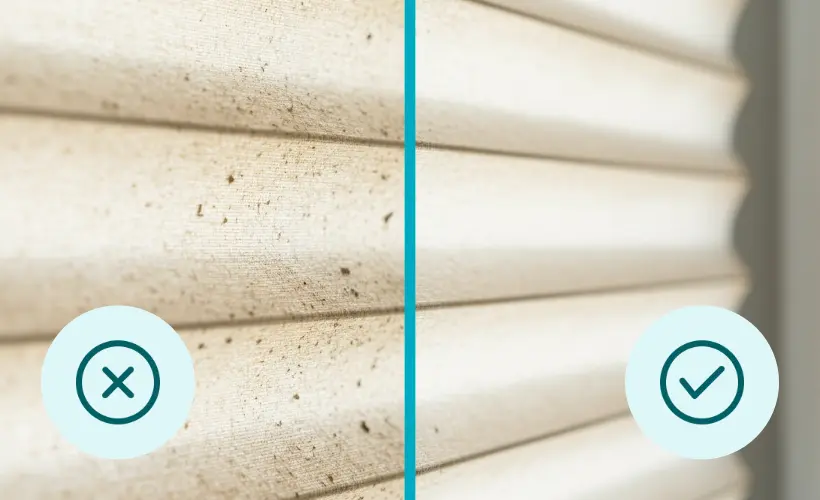
Dust removal from pleated blinds works similarly to furniture cleaning. We recommend dry cleaning—in most cases, a damp cloth isn’t necessary, and excess moisture can damage the fabric.
Dry Cleaning to Remove Dust
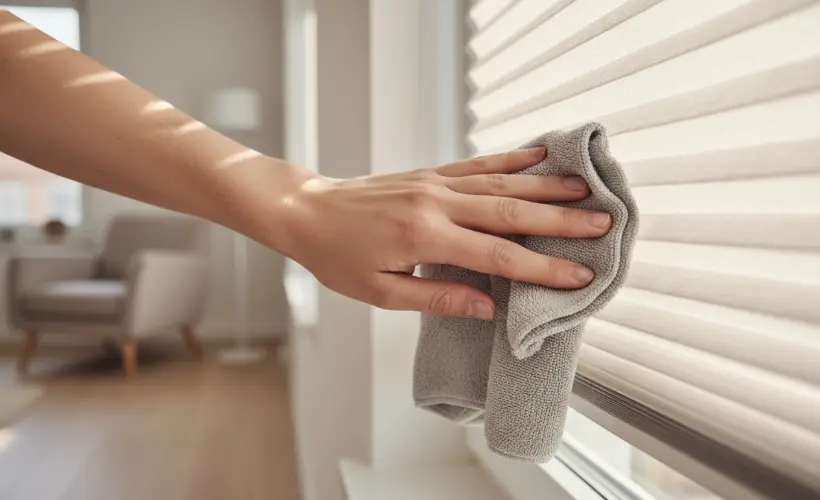
There are several dry-cleaning methods. The simplest is to use a dry cloth. If the fabric isn’t heavily soiled, usually a few wipes with a dry cloth are enough to restore the pleated blind’s original appearance. This can be done as often as needed—dry cleaning won’t damage the pleated surface, as long as the fabric is gently wiped and not scrubbed. When basic caution is observed, this method is completely safe for the material.
If you’re worried that using a regular cloth might apply too much pressure to the pleated surface, there are special products on the market that attract dust “like a magnet” without the need to press against the fabric. These products can also be used to clean pleated blinds. They’re not only safer for the fabric but usually more effective than traditional cloths, as they collect dust mites more efficiently.
Beige Window Pleated Blind
Beige Window Pleated Blind
12
new
Estika.eu
A Stylish Accent in Every Room
The beige pleated blind is the perfect choice for those who value elegance and subtlety. Its delicate, neutral shade blends seamlessly with a variety of interior styles – from modern to classic. A beige pleated blind adds warmth and coziness without overwhelming the space. It’s an ideal solution for the living room, bedroom, kitchen, or office, giving each room a unique and refined character. Choose a beige blind to highlight the individual style of your home!
Full Control Over Light and Comfort
With the beige pleated blind, you gain full control over the amount of light entering the room. The precise adjustment system allows you to set the lighting level just the way you want – from gently diffused sunlight to complete blackout. This blind is perfect for both living areas and bedrooms, protecting you from glare during the day and ensuring privacy in the evening. The beige color further warms the interior, adding harmony and a sense of calm.
Durability, Easy Installation, and Convenience
The beige pleated blind is a symbol of quality and durability. Made from high-quality materials, it is resistant to fading and daily wear, ensuring long-lasting performance. Its installation is simple and requires no specialized tools – you can mount it yourself without the need for professionals. Plus, it’s incredibly easy to maintain – just wipe it with a damp cloth to keep it looking flawless for years to come.
Material of the Beige Pleated Blind: Polyester (PES)
The pleated blind is made from a high-quality, durable material that offers excellent protection against sunlight. It is crafted from polyester fabric folded into a pleated structure and coated with an antistatic layer that prevents dust accumulation. The PES material used in pleated blinds is extremely resilient and does not deform under heat. It retains its color even with sun exposure and does not attract moths. Additionally, polyester is lightweight and easy to maintain.
Polyester fibers do not absorb moisture, making this blind a perfect choice for high-humidity areas such as kitchens or bathrooms.
Beige Honeycomb Blinds
Beige Honeycomb Blinds
36
new
Estika.eu
Natural Elegance and Harmony in Your Home
The "Honeycomb" pleated blind in a soft beige shade is more than just a window covering – it’s a design element that brings natural elegance and harmony to your interior. Its subtle color blends beautifully with a wide range of décor styles, from classic to modern, adding a warm and cozy touch to any room. Perfect for those who want to combine functionality with distinctive design.
Thermal Comfort and Energy Efficiency Within Reach
Thanks to its unique honeycomb structure, our beige pleated blind not only enhances your décor but also ensures your comfort. The cellular design of the fabric forms a natural thermal insulation barrier that helps maintain optimal indoor temperatures all year round. In winter, it retains heat; in summer, it reflects sunlight, preventing the room from overheating. Make a smart choice – choose a solution that lowers energy costs and enhances your well-being.
Practicality and Ease of Use
Installing "Honeycomb" pleated blinds has never been easier. No need for specialized tools or complicated instructions – just a few minutes is all it takes to enjoy a perfect window decoration. Additionally, the blind is made from stain-resistant material, making cleaning effortless – simply wipe it with a damp cloth, and it looks like new. It’s the ideal solution for those who value convenience and time-saving functionality.
Cream Blackout Pleated Blind
Cream Blackout Pleated Blind
43
new
Estika.eu
Subtle Elegance and Complete Blackout – Cream Blackout Pleated Blind
Introduce a gentle accent to your home that also provides full protection from sunlight. The cream blackout pleated blind is a blend of style and functionality that fits beautifully into a variety of interior designs. The cream shade of the pleats complements both modern and classic spaces, adding warmth and coziness. Perfect for the living room, bedroom, or office, where privacy and comfort are top priorities.
Comfort and Light Control – The Perfect Everyday Solution
With the cream blackout pleated blind, you have full control over the amount of light entering your space. Thanks to advanced pleating technology, you can precisely adjust the light permeability – from complete blackout, ideal for bedrooms, to gentle light diffusion in the living room. It’s not just about blocking out light; it’s about creating the perfect atmosphere for relaxation or work. Installation is simple and quick, and keeping the pleats clean is effortless.
Durability and Sophisticated Style – Cream Pleated Blind for Years to Come
The cream blackout pleated blind is made from high-quality materials that are UV-resistant and retain their beautiful color for years. With its sturdy construction, the blind remains in excellent condition regardless of how often it’s used. Its versatile cream shade brings a sense of calm to any interior while also providing excellent thermal and acoustic insulation. It’s an investment in comfort, style, and long-lasting quality that you’ll appreciate every day.
Cleaning Pleated Blinds with a Vacuum Cleaner?
This idea might sound unusual, but it can be very effective if you take a few precautions. First of all, never use a vacuum cleaner on an unfolded pleated blind—even on the lowest setting, there's a high risk of damage.
The blind should be fully folded so the fabric forms a compact surface. Then set the vacuum to the lowest power setting and use a soft brush attachment to protect the fabric. In most cases, the results are quick and satisfying, especially if the blind has collected a significant amount of dust.
What If Dry Wiping Isn’t Enough?
Dry cleaning works great for dust, but it might not be sufficient for other types of dirt. A layer of grease on a kitchen pleated blind is almost impossible to remove with a dry cloth. If you want to keep the blind in good condition, wet cleaning will be necessary. So how do you remove dirt effectively without damaging the material?
How to Perform Wet Cleaning?
For light stains that can’t be removed with dry cleaning, a damp cloth is a good solution. However, before wiping with a damp cloth, first remove the dust from the pleated surface. This will make dirt removal easier—wiping a dusty surface with a damp cloth is ineffective. Moist dust turns into clumps that stick to the fabric and are hard to remove. So first remove the dust—it will save you trouble later. How to do that has already been described above.
Choosing Detergents and Cloths
You can use a mild cleaning agent—ideally prepare a bowl with lukewarm water and a small amount of detergent, such as degreasing dish soap. The water should be lukewarm, never hot, as high temperatures can damage the fabric. Cold water is less effective and less comfortable to work with. Lukewarm water boosts detergent performance—after all, we also wash dishes in warm water. Still, use moderation and avoid excessively high temperatures.
Also, pay attention to the quality of the cloth. It should be soft to protect the material and should not leave lint behind. Removing dirt won’t help much if fibers remain on the fabric. A soft cloth minimizes friction and makes cleaning easier without damaging the fabric.
White Window Pleated Blind
White Window Pleated Blind
2
new
Estika.eu
Elegance in Your Window: Made-to-Measure White Pleated Blind
Add a unique charm to your interiors with a made-to-measure white pleated blind. Designed with both style and functionality in mind, this blind combines minimalist design with maximum comfort. Perfect for any room, it subtly lets light through, creating a warm and cozy atmosphere. Tailored to your needs and available in a wide range of sizes – it guarantees a perfect fit for every window. Choose quality that truly impresses!
Functionality and Comfort: Why Choose a Made-to-Measure Pleated Blind?
A pleated blind is not just a stylish addition – it’s also a practical everyday solution. With the ability to adjust the level of sunlight, it provides optimal conditions for work, rest, and relaxation. It’s a great choice for the living room, bedroom, or kitchen. Made from high-quality, fade-resistant material and easy to clean – this is a product that will last for years while keeping its flawless look.
Perfect Fit: A Pleated Blind That Matches Any Interior
Your home, your rules! With our made-to-measure pleated blind, you can shape your space just the way you like it. A white pleated blind is a timeless classic that never goes out of style. It complements modern interiors just as well as traditional ones. Simple yet elegant – it creates the perfect backdrop for any décor. Treat yourself to a space that reflects your personality!
White-Grey Honeycomb Blinds
White-Grey Honeycomb Blinds
33
new
Estika.eu
🐝 White and Grey Honeycomb Pleated Blinds – Elegance and Functionality in One!
Bring subtle elegance into your home with white and grey honeycomb pleated blinds! The delicate white tone beautifully brightens up any room, adding a sense of lightness and freshness. Honeycomb pleated blinds are not only an aesthetic choice but also offer top-tier functionality. Thanks to their unique honeycomb structure, they provide excellent thermal insulation, helping maintain the ideal indoor temperature all year round. Save on energy bills and enjoy uncompromised comfort!
☀️ Light and Privacy Control – Blinds for Every Occasion
The white and grey honeycomb pleated blinds are a perfect solution if you're looking for a way to regulate light in your home. Thanks to the advanced honeycomb design, you can freely control the amount of light entering the room – from gentle diffusion to full blackout. It's an ideal option for those who value privacy while still enjoying natural daylight. Gain full control over your home’s ambiance with pleated blinds that adapt to your needs.
🔧 Quick Installation, Hassle-Free Use
The white and grey honeycomb pleated blinds are extremely easy to install – no complicated tools required. Thanks to their precise fit for various window types, honeycomb pleated blinds provide a stylish and secure finish. Their unique structure not only effectively blocks unwanted views but also offers exceptional durability and easy maintenance. This is a product that meets the needs of the most demanding users, offering everyday comfort and style.
White Blackout Pleated Blind
White Blackout Pleated Blind
40
new
Estika.eu
Perfect Sun Protection – White Blackout Pleated Blind
Do your windows need reliable yet stylish protection from excessive sunlight? The white blackout pleated blind is the perfect solution! Made from high-quality material, it provides complete room darkening, making it ideal for bedrooms, living rooms, or offices. Enjoy privacy and coolness without bothersome sun rays. The white color of the pleats matches any interior style, adding elegance and subtlety.
Functionality and Aesthetics in One – White Blackout Pleated Blind
Pleated blinds combine functionality with aesthetics, and this model is the essence of practicality. Thanks to its innovative design, the pleated blind allows precise control over the amount of light entering the room. The blackout feature not only enhances comfort but also helps save energy – keeping the room cooler in summer and warmer in winter. The product is easy to install and maintain, with adjustable positioning to tailor the lighting to your preferences.
Perfect Craftsmanship and Durability – White Pleated Blinds for Any Interior
Looking for a blind that will serve you for years? The white blackout pleated blind is a long-term investment. Made from UV-resistant materials, it maintains its appearance over time without losing functionality or aesthetic appeal. It fits perfectly with both modern and classic interior designs. Installation on the window frame is quick and non-invasive, and the product’s durability ensures satisfaction for many years to come.
No Need to Remove—But Be Careful!
Wet cleaning can be done without removing the pleated blind from the window. Just make sure you have clear access to the window and the entire blind. This way, you’ll avoid the risk of damaging the blind through unintentional movement. Of course, you can take the blind down if you wish, but it’s not necessary. Due to how pleated blinds are mounted, removal is not even recommended.
Even if you’re using a damp, soft, lint-free cloth, be cautious! Don’t apply too much pressure and avoid vigorous scrubbing. Excessive friction may remove the dirt but can also damage the fabric. If a hole appears, the only solution will be to replace the blind, and the old pleated blind will unfortunately have to be discarded or recycled. Also, don’t soak the fabric—it could alter its properties.
Caution with Thermal Insulation Fabrics!
Be especially careful if the pleated blind is made of thermal insulation fabric. The silver foil layer should not come into contact with moisture. Only the surface without the silver coating can be gently wiped.
What About Heavier Soiling?
In some cases, pleated blinds can be hand washed. Machine washing is not recommended, as it can damage both the fabric and the plastic components of the blind. So how do you wash pleated blinds safely?
Washing is a solution for more serious stains. If the stains are small and not too stubborn, first try removing them with a soft, damp cloth. Only if this method fails should you consider hand washing. However, remember there’s no guarantee the blind will look like new after washing.
How to Wash Them?
The first step, just like in wet cleaning, is to remove dust using a dry cloth or a dust magnet. This prevents dust from accumulating in the water during washing. You can do this before removing the blind from the window.
It’s best to wash the blind in a bathtub. Prepare cool water (no warmer than 30°C) with a gentle detergent, such as fabric wash for delicates. Submerge the blind in water and wash gently. Then rinse it to remove any detergent residue. After washing, gently squeeze out excess water, fold the blind, and leave it to dry in the closed position. If it dries unfolded, it may deform and become unusable.
While drying, it's worth occasionally opening and closing the blind. This prevents the fabric layers from sticking together. Once dried, separating them might be impossible.
Light Grey Window Pleated Blind
Light Grey Window Pleated Blind
10
new
Estika.eu
Elegance and Functionality in Your Home
Discover a new standard in window decoration with our light grey pleated blind. This exceptional product combines the aesthetics of modern design with everyday practicality. It fits perfectly into any interior, adding a touch of freshness and elegance. Thanks to its subtle grey shade, the blind harmonizes beautifully with both light and dark wall colors, creating a balanced and inviting atmosphere. It’s the perfect solution for those who value both style and comfort.
Complete Control of Light and Privacy
Enjoy full control over the amount of light entering your home with our pleated blind. Its adjustable design allows you to precisely manage the level of illumination – from gently diffused sunlight to complete blackout. No matter the time of day, you can create the perfect conditions for rest, work, or relaxation. Additionally, the blind offers excellent privacy protection, shielding your interior from outside view.
Durability and Ease of Use
The light grey pleated blind offers more than just a beautiful look – it also delivers dependable quality. Made from premium materials, it is resistant to fading and damage, ensuring long-lasting performance. The simple installation and operation system makes it suitable for any room – from the living room and bedroom to the kitchen. Maintenance is exceptionally easy – just wipe it with a damp cloth to keep it looking great for years to come.
Light Grey Honeycomb Blinds
Light Grey Honeycomb Blinds
35
new
Estika.eu
Perfect Balance Between Light and Privacy
Discover the "Honeycomb" pleated blind in an elegant light grey shade – a unique window decoration that not only enhances the aesthetics of your interior but also ensures your privacy. Thanks to its distinctive honeycomb structure, this pleated blind effectively protects against excessive sunlight while allowing gentle, natural light to enter the room. It’s the ideal solution for anyone who values functionality in harmony with modern design.
Energy Efficiency and Year-Round Comfort
The "Honeycomb" pleated blind is not just a beautiful accessory – it's also a smart way to save energy. Its cellular structure creates an insulating barrier that helps maintain the right indoor temperature – keeping the heat out in summer and preventing heat loss in winter. It’s a solution that lets you enjoy comfort all year round while reducing your energy bills. Invest in comfort and savings with our pleated blind!
Easy Installation and Maintenance
You don't need to be an expert to install the "Honeycomb" pleated blind. Its intuitive mounting system allows for installation in just a few minutes, with no need for specialized tools. Additionally, thanks to high-quality materials, the blind is easy to keep clean – simply wipe it with a damp cloth to make it look like new. Perfect for busy people who value simplicity and convenience.
Ash Grey Blackout Pleated Blind
Ash Grey Blackout Pleated Blind
42
new
Estika.eu
Elegant and Functional – Ash Grey Blackout Pleated Blind
Are you looking for a practical yet stylish solution that brings harmony and comfort to your interior? The ash grey blackout pleated blind is the perfect choice for those who value subtle elegance and functionality. The grey shade blends beautifully with modern interiors, adding class and sophistication. Additionally, thanks to its full blackout properties, it ensures privacy and protection from intense sunlight, creating the perfect conditions for relaxation at any time of day.
Everyday Convenience – Precise Light Control
The ash grey blackout pleated blind offers full control over the amount of light entering the room. Its innovative design allows you to position the blind at various heights, adjusting the lighting to your preferences. Darkening the room helps create ideal conditions for rest or work, regardless of the time of day. The high-quality materials make it easy to keep clean, and the installation is quick and intuitive, making it a perfect everyday solution.
Long-Lasting Durability and Style – Ash Grey Pleated Blind
By choosing the ash grey blackout pleated blind, you're investing in a product that will serve you for years. Made from durable, UV-resistant materials, the blind maintains its elegant appearance over time, without fading or deforming from use. It pairs perfectly with a variety of interior styles, from modern to more classic designs. Additionally, its thermal insulation properties help maintain the right indoor temperature, making it an ideal solution for any home.
Important Washing Restrictions
When washing pleated blinds, take special care and follow several important rules. Above all, this cleaning method is not suitable for thermal insulation blinds or honeycomb (cellular) pleated blinds. Moisture can permanently damage the silver coating.
Water Temperature
Water that’s too warm can damage any fabric used in blind manufacturing. As mentioned earlier, water should be cool or lukewarm (maximum 30°C). Higher temperatures weaken the fibers and may deform the fabric.
Absolutely Avoid Ironing
Ironing pleated blinds is a very bad idea. High iron temperatures can destroy the material, and the pleats may lose their distinctive shape and structure. They could become "flattened," losing their aesthetic and functional qualities.
Drying Time
Drying pleated blinds after washing requires patience. It usually takes more than 12 hours and cannot be rushed. The fabric must dry naturally to maintain its properties and appearance. Speeding up the process may lead to fabric deformation.


 Standard Pleated Blinds
 Blackout Pleated Blinds
 Honeycomb Pleated Blinds
 Day & Night Blinds
 Blackout Blinds
 Standard Blinds
 Custom Roof Blinds


 Style & DesignJapandi style – how to create a calm and natural interior?23 July 2026 r.
 Style & DesignNautical style in interiors – how to decorate your home?22 July 2026 r.
 Style & DesignChildren’s room – how can you create the right environment for play and relaxation?20 July 2026 r.
 Style & DesignBoho-style interior – natural materials, lightness and a cosy atmosphere.13 July 2026 r.


